The Jungle Detoxifier
Ajo Sacha (Mansoa alliacea)
Ajo Sacha is one of the most valued cleansing plants in the Amazonian herbal tradition, and one of the friendliest Master Plants to start with. This guide covers what the plant is, how it is traditionally used, and how to prepare the root at home - as a simple tea, a tincture, or a three-day Dieta.
About the plant
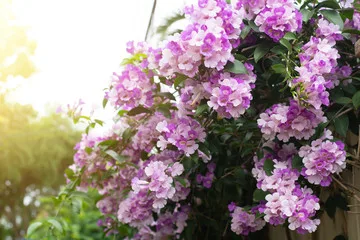
Ajo Sacha (Mansoa alliacea) is a shrubby vine that grows in the lowland Amazon rainforest. Its name means "wild garlic" - ajo is Spanish for garlic, sacha is Quechua for wild - because its crushed leaves smell strongly of garlic, even though the plant is not related to it.[1] It produces lovely violet, trumpet-shaped flowers that fade to white. The leaves, stems, and root all have a place in Amazonian herbal practice, but for the Dietas we practice, we use the root - and it carries the same garlic-like taste and smell.
Ajo Sacha benefits and traditional uses
Ajo Sacha has been used in the Amazon for generations, for both physical and personal work. Written accounts describe teas, baths, smoke, and tinctures made from different parts of the plant. Here is how people have worked with it, alongside what we notice in our own practice.
For the body
- Cleansing, colds, and fevers - infusions of the plant are a common remedy for colds, fevers, coughs, and headaches,[6][2] and in the Chazuta valley it is recorded as a depurative (cleansing plant).[4] This is why we reach for it during recovery, fatigue, and seasonal illness.
- Joints and rheumatism - the most common physical use. In that same survey, 41 of the 58 recorded uses were for rheumatism, with the root and stem bark simply steeped in fresh water[4]. Our root tea below starts with boiling water and steeps overnight. Healers around Iquitos use it for rheumatism too,[3] and folk use extends to arthritis and inflammation.[2]
- A whole-body tonic - the root is traditionally steeped in water as a tonic[6] or in cane alcohol as a "regenerative whole-body tonic,"[2] and local healers also give it for gastritis and for weakness caused by intestinal parasites.[4]
For the spirit and energy
- Clearing bad luck and heavy energy - this is Ajo Sacha's signature. A classic study of an Iquitos healer records baths of Ajo Sacha for curing saladera, the Amazonian "bad luck" condition.[3] Across the region the plant is used to drive away bad spirits and bring good luck, its leaves are burned as a smudge to cleanse the spirit,[2] and it appears in rituals "to clean and to purify."[6]
- A teacher plant - the same healer said Ajo Sacha "teaches medicine" when the proper diet is observed, and counted it among the most important plants in his practice.[3] It is a dieted plant in the San Martín valleys[5] and a classic ingredient of healers' ceremonial brews.[4][2]
- Readiness and resolve - the Shipibo-Conibo drink the bark tea for good luck before hunting and fishing,[2] and hunters of the Peruvian Amazon diet the plant to prepare themselves for the hunt.[5] In our experience this is the same quality people notice today: a stronger resolve and a clearer head.
- Grounding, clarity, and dreams - people who work with Ajo Sacha often tell us about calm, reflective states and, like with many Master Plants, more vivid and memorable dreams.
You do not need to hold any particular beliefs to drink the tea, but if you are curious about Master Plant Dietas, Ajo Sacha is one of the two plants we most often recommend to beginners (the other is Bobinsana).
How to prepare Ajo Sacha
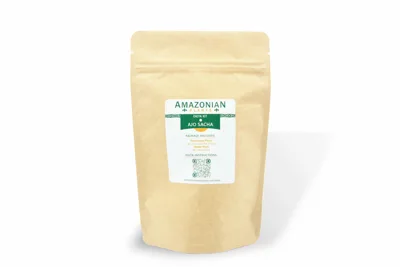
We prepare Ajo Sacha root as an infusion: pour boiling water over the powder and let it steep overnight, without simmering it on the stove. This differs from a cold-water maceration, which starts with unheated water.
The tea recipe below uses our powdered root. For a three-day Dieta, follow the Dieta batch recipe, which makes about six cups and has its own quantities and brewing times.
Tea
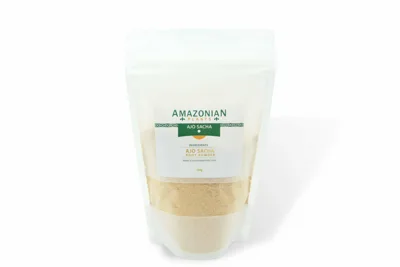
- Put 1 rounded tablespoon of Ajo Sacha root powder into a cup.
- Add 1 cup of boiling water.
- Cover and let it steep overnight.
- Strain and drink, hot or cold.
Tincture
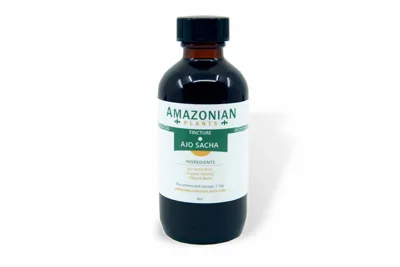
Take 1 teaspoon of the Ajo Sacha tincture - a convenient option if you don't want to brew.
Master Plant Dieta
A Dieta gives you time to build a deeper connection with the plant. In our three-day practice, you drink Ajo Sacha tea morning and evening while keeping a simple diet and quiet routine. The Ajo Sacha Dieta Kit includes everything you need, and our step-by-step Master Plant Dieta guide covers preparation, brewing, and the daily protocol.
How to brew Ajo Sacha tea
Watch our short video on brewing the tea:
Frequently asked questions
What is Ajo Sacha?
Ajo Sacha is Mansoa alliacea, a woody Amazonian vine whose crushed leaves and roots smell strongly of garlic - the name literally means "wild garlic".
Is Ajo Sacha related to garlic?
No - the garlic smell is the plant's own. Ajo Sacha belongs to a completely different family (Bignoniaceae); it just happens to share the aroma.
How do you prepare Ajo Sacha tea?
Unlike most Master Plants, the root is steeped rather than boiled: cover 1 rounded tablespoon of root powder with a cup of boiling water, let it steep overnight, and strain.
Can I do a Master Plant Dieta with Ajo Sacha?
Yes - it is one of the two plants we most often recommend to beginners, together with Bobinsana. Our Master Plant Dieta guide walks through the whole three-day practice.
What does Ajo Sacha tea taste like?
The root has a garlic-like taste and smell. Think savory rather than sweet or floral - the aroma is a big part of this plant's character.
FDA disclosure: These statements have not been evaluated by the Food and Drug Administration. Our products are not intended to diagnose, treat, cure, or prevent any disease. The information on this page is provided for educational and cultural purposes only and is not medical advice. Talk to your healthcare provider before working with any plant. See our Terms & Conditions for the full disclosure.
References and further reading
- Mansoa alliacea. Plants of the World Online, Royal Botanic Gardens, Kew.
- Taylor, L. Ajos Sacha (Mansoa alliacea). Tropical Plant Database, Raintree.
- Luna, L. E. (1984). The Healing Practices of a Peruvian Shaman. Journal of Ethnopharmacology, 11(2), 123-133.
- Sanz-Biset, J., Campos-de-la-Cruz, J., Epiquién-Rivera, M. A. & Cañigueral, S. (2009). A First Survey on the Medicinal Plants of the Chazuta Valley (Peruvian Amazon). Journal of Ethnopharmacology, 122(2), 333-362.
- Sanz-Biset, J. & Cañigueral, S. (2011). Plant Use in the Medicinal Practices Known as "Strict Diets" in Chazuta Valley (Peruvian Amazon). Journal of Ethnopharmacology, 137(1), 271-288.
- Zoghbi, M. G. B., Oliveira, J. & Guilhon, G. M. S. P. (2009). The Genus Mansoa (Bignoniaceae): A Source of Organosulfur Compounds. Revista Brasileira de Farmacognosia, 19(3).
- O'Shaughnessy, D. & Berlowitz, I. (2021). Amazonian Medicine and the Psychedelic Revival: Considering the "Dieta". Frontiers in Pharmacology.
Ajo Sacha in our shop
Everything below is prepared from the same plant this article describes.