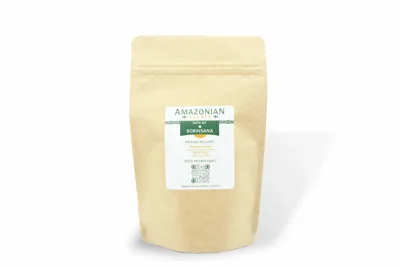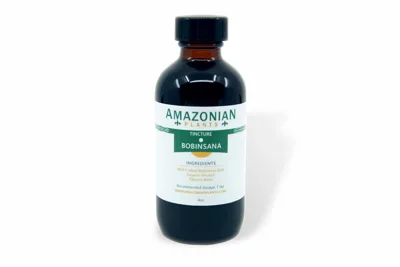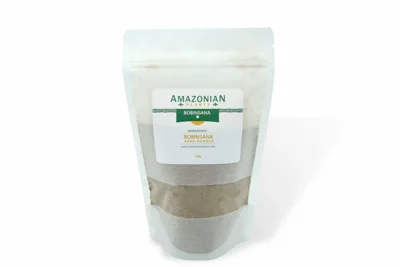
The Heart Opener
Bobinsana (Calliandra angustifolia)
Bobinsana is a gentle, heart-opening plant deeply respected among the indigenous people of the Amazon. It grows along rivers with its roots in the current, and it is one of the friendliest Master Plants - a favorite first choice for people new to plant work. This guide covers the plant, its tradition, and how to prepare the bark at home.
About the plant
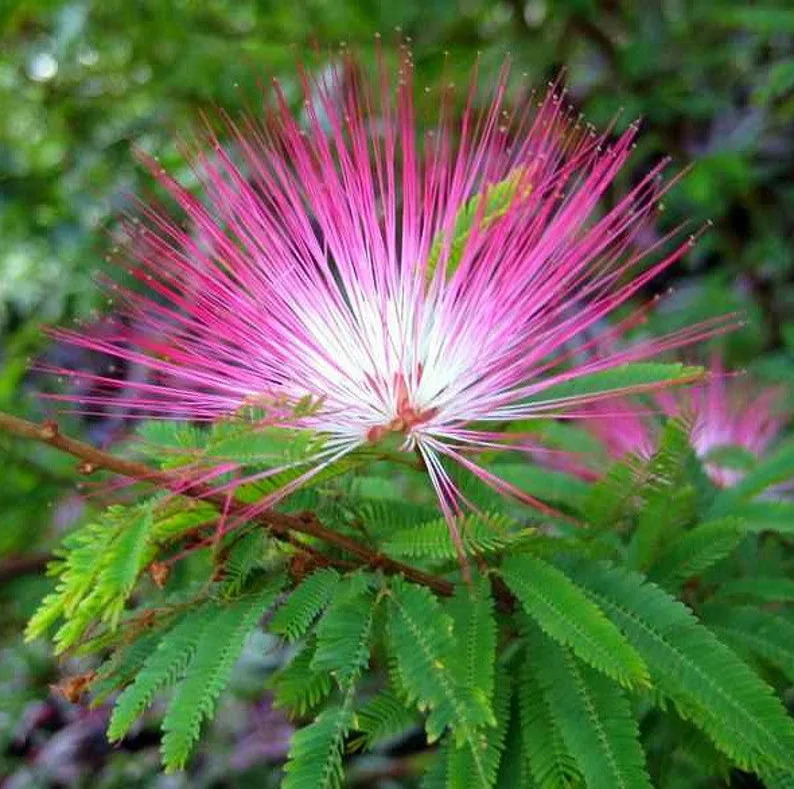
Bobinsana (Calliandra angustifolia) is a small tree that grows along rivers and streams in the Amazon, with its roots often standing in water. It has feathery leaves and soft pink, powder-puff flowers.[1] We work with the bark. Other traditional preparations use the roots or the whole plant, which is why accounts of Bobinsana sometimes describe different recipes.
Bobinsana benefits and traditional uses
Bobinsana's reputation in the Amazon is built around the heart, but the bark also has a long record of everyday physical use. Here is what the tradition, and the researchers who have written it down, say about why people drink it.
For the body
- Joints and rheumatism - the Shipibo-Conibo prepare a bark tincture for rheumatism, arthritis, and colds, and Peruvian herbalists use the bark decoction as an anti-rheumatic.[2] In the Chazuta valley it is one of the plants dieted against inflammatory ailments.[3]
- Strength and resistance - along the Rio Pastaza a root decoction is taken for strength and energy, and bark baths are used to build resistance to sickness and cold.[2]
- Women's health - traditionally used for uterine disorders, and also as a contraceptive[2] - which is why we suggest skipping it if you are trying to conceive. This is a report of traditional use, not an established birth-control method.
- A gentle tonic - in Peruvian herbal practice the bark is described as a tonic, stimulant, and depurative (a cleansing plant).[2] It is also one of the most-cited medicinal plants of that valley.[4]
For the spirit and energy
- A teacher plant - Bobinsana is among the most dieted plants in the Peruvian Amazon: the third most-used plant in the strict diets of the San Martín valleys,[3] and the third most common primary Dieta plant in a study of 80 dieters at the Takiwasi center.[5] Healers also work with it as a plant teacher, to connect with and learn from the plants.[2]
- Emotional steadiness - as a Master Plant it is described as bringing calm, flexibility, rootedness, and emotional stability, and helping people express their feelings.[6]
- Resilience learned from the river - healers there explain that streamside plants like Bobinsana withstand strong currents through heavy storms, an endurance they consider a gift of the water spirits, and that the plant passes this quality on.[3]
- Heart work and dreams - in our own experience, and in what people tell us, Bobinsana is the plant for grief, heartbreak, and old emotional wounds, and it often brings vivid, emotionally clear dreams.
Healers describe Bobinsana as a kind and gentle teacher. Growing by the river with its roots in the current, it is said to teach flexibility - staying rooted while letting emotions flow through. You do not need to hold any particular beliefs to drink the tea, but if you are curious about Master Plant Dietas, Bobinsana is one of the two plants we most often recommend to beginners (the other is Ajo Sacha).
How to prepare Bobinsana
Our simple Bobinsana tea combines a brief boil with a longer steep to draw out the powdered bark.
The tea recipe below uses our powdered bark. For a three-day Dieta, follow the Dieta batch recipe, which makes about six cups and has its own quantities and brewing times.
Tea
- Put 1 teaspoon of Bobinsana bark powder into a small pot with 1-2 cups of water.
- Gently boil for 5 minutes.
- Turn off the heat, cover, and let it steep for at least 15 more minutes.
- Strain and drink, hot or cold.
Tincture
Take 1 teaspoon of the Bobinsana tincture - a convenient option if you don't want to brew.
Master Plant Dieta
A Dieta gives you time to build a deeper connection with the plant. In our three-day practice, you drink Bobinsana tea morning and evening while keeping a simple diet and quiet routine. The Bobinsana Dieta Kit includes everything you need, and our step-by-step Master Plant Dieta guide covers preparation, brewing, and the daily protocol.
How to brew Bobinsana tea
Watch our short video on brewing the tea:
Frequently asked questions
What is Bobinsana?
Bobinsana is Calliandra angustifolia, a small Amazonian tree with soft pink powder-puff flowers. It grows along rivers and streams, often with its roots right in the water.
What part of the plant is used?
The bark - we use it for tea, tinctures, and Dieta brews.
How do you prepare Bobinsana tea?
Gently boil 1 teaspoon of bark powder in 1-2 cups of water for 5 minutes, then let it steep for at least 15 more minutes and strain.
Why is Bobinsana called the heart opener?
Its reputation in the Amazon is built around the heart: grief, heartbreak, connection, and emotions that stay stuck inside. People who work with it often describe feeling softer and more open.
How do I choose between Bobinsana and Ajo Sacha?
We often suggest both as first Dieta plants. Bobinsana is the one we associate with grief, emotional openness, and connection; Ajo Sacha with cleansing, clarity, and resolve. Start with the plant whose character speaks to what you want to explore.
FDA disclosure: These statements have not been evaluated by the Food and Drug Administration. Our products are not intended to diagnose, treat, cure, or prevent any disease. The information on this page is provided for educational and cultural purposes only and is not medical advice. Talk to your healthcare provider before working with any plant. See our Terms & Conditions for the full disclosure.
References and further reading
- Calliandra angustifolia. Plants of the World Online, Royal Botanic Gardens, Kew.
- Taylor, L. Bobinsana (Calliandra angustifolia). Tropical Plant Database, Raintree.
- Sanz-Biset, J. & Cañigueral, S. (2011). Plant Use in the Medicinal Practices Known as "Strict Diets" in Chazuta Valley (Peruvian Amazon). Journal of Ethnopharmacology, 137(1), 271-288.
- Sanz-Biset, J., Campos-de-la-Cruz, J., Epiquién-Rivera, M. A. & Cañigueral, S. (2009). A First Survey on the Medicinal Plants of the Chazuta Valley (Peruvian Amazon). Journal of Ethnopharmacology, 122(2), 333-362.
- Rumlerová, T., Marcus, O., González Mariscal, J. M., Horák, M. & Politi, M. (2021). Experiencias de dieta terapéutica a base de plantas medicinales amazónicas en el Centro Takiwasi en Perú. Mendel University Press.
- Cervi, F., Friso, F., Saucedo, G., Biolcati, R., Torres, J. & Politi, M. (2019). La experiencia de la comunidad terapéutica "Centro Takiwasi" en el contexto de la medicina natural e integrativa. Medicina Naturista, 13(2).
- Berlowitz, I. et al. (2022). Teacher Plants: Indigenous Peruvian-Amazonian Dietary Practices as a Method for Using Psychoactives. Journal of Ethnopharmacology.
Bobinsana in our shop
Everything below is prepared from the same plant this article describes.