The Strength Tonic of the Amazon
Chuchuhuasi (Maytenus laevis)
Chuchuhuasi is one of the best-known traditional remedies in the Amazon - visit a jungle market in Peru and you will almost certainly find it. The bark has been used for generations as a tonic for strength, warmth, and endurance. This guide covers the tree, its tradition, and how to prepare the bark at home.
About the tree
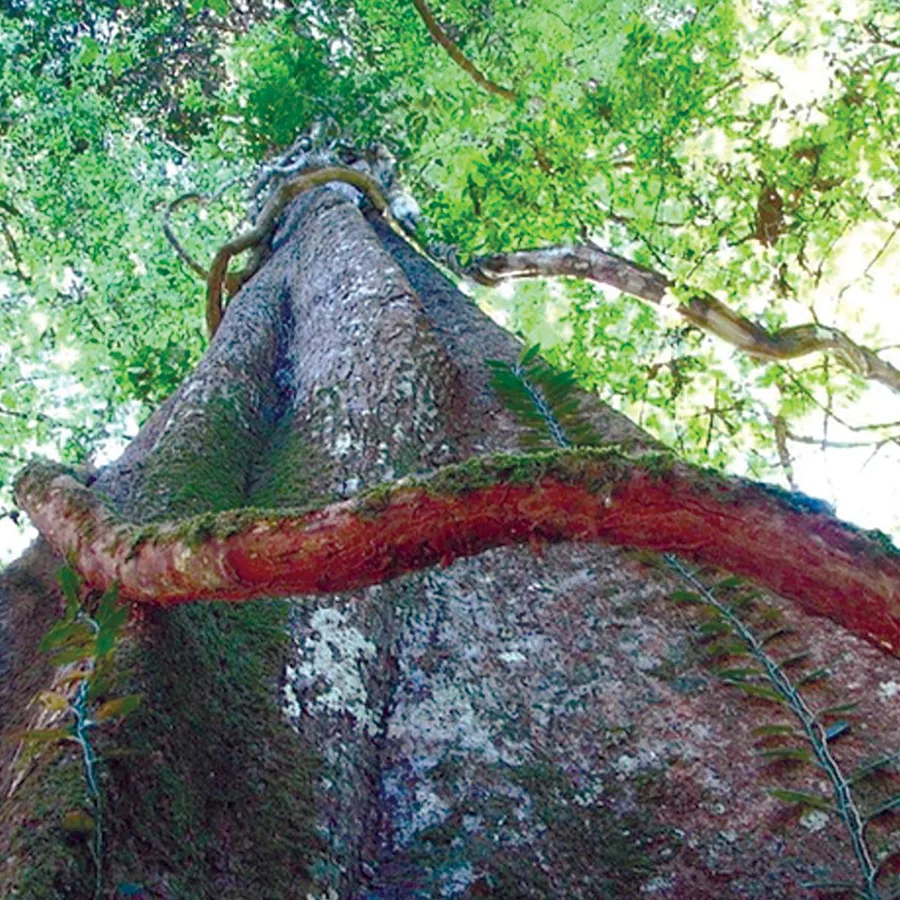
Chuchuhuasi is known for its tough, reddish-brown bark and pleasantly bitter, woody taste. We use the botanical name Maytenus laevis here. Kew records that species from southeastern Colombia to Guyana and northern Brazil.[1]
Chuchuhuasi benefits and traditional uses
If you visit a jungle market in Peru, you will almost certainly find Chuchuhuasi. It is a household remedy across the region, and one of the best-documented Master Plants. Here is why people drink it.
For the body
- Joints, back, and rheumatism - this is the classic use. A review of the research describes Chuchuhuasi bark as "used to treat rheumatism almost everywhere in Amazonia,"[2] and in the Chazuta valley survey it was by far the most-used medicinal plant, named in 51 of 232 reports for rheumatism.[3] Folk use also covers arthritis, back pain, and muscle aches.[4]
- Strength and recovery - the bark is taken as a general health tonic, as a postpartum tonic, and to support healing after broken bones.[2] Locals often soak the bark or root in alcohol to make a warming "jungle tonic".[2]
- Vitality and warmth - Chuchuhuasi is the most-recorded aphrodisiac in that survey[3] and is widely used as an energizing daily drink.[2][4]
- Everyday remedies - the bark decoction is used for colds and bronchitis, diarrhea, and fever,[2][4] and is traditionally described as anti-inflammatory and fever-reducing.[6]
For the spirit and energy
- A Master Plant - Chuchuhuasi is explicitly known as a Master Plant with effects on the mind and nervous system,[6] it is used in the traditional "sama" fasting ritual of San Martín,[2] and it was the most common companion plant in a study of 80 Dietas at the Takiwasi center.[7]
- Firmness from the bark - Healers of the strict-diet tradition point out that Chuchuhuasi has an unusually thick, hard bark, and they consider this toughness and strength to pass into its medicine and into the person who diets it.[5]
- Rectitude and centeredness - in the Dieta tradition it is said to increase strength and vigor, to teach "rectitude," to help a person become more centered, and to work on wounds passed down through the family.[8]
- Grounding and confidence - in our experience, and in what people tell us after a Dieta, Chuchuhuasi brings a steady, energizing presence and a quiet confidence in daily life.
In the Master Plant tradition, Chuchuhuasi is seen as a strong and supportive teacher - a plant that lends its firmness to the person drinking it. You do not need to hold any particular beliefs to enjoy the tea, but those who do a Dieta with Chuchuhuasi often describe feeling steadier and more confident afterwards.
How to prepare Chuchuhuasi
Chuchuhuasi gets a longer boil than most of the barks in this library.
The tea recipe below uses our powdered bark. For a three-day Dieta, follow the Dieta batch recipe, which makes about six cups and has its own quantities and brewing times.
Tea
- Put 1 teaspoon of Chuchuhuasi bark powder into a small pot with 1-2 cups of water.
- Gently boil for 15 minutes.
- Turn off the heat, cover, and let it steep for at least 5 more minutes.
- Strain and drink, hot or cold.
Tincture
Take 1 teaspoon of the Chuchuhuasi tincture - a convenient option if you don't want to brew.
Master Plant Dieta
A Dieta gives you time to build a deeper connection with the plant. In our three-day practice, you drink Chuchuhuasi tea morning and evening while keeping a simple diet and quiet routine. The Chuchuhuasi Dieta Kit includes everything you need, and our step-by-step Master Plant Dieta guide covers preparation, brewing, and the daily protocol.
Frequently asked questions
What is Chuchuhuasi?
Chuchuhuasi is a common name for Amazonian trees whose bark is used as a strengthening tonic. We use the name Maytenus laevis here; published accounts also discuss other species under the same common name.
What does Chuchuhuasi taste like?
Pleasantly bitter and woody. In Peru the bark is often soaked in alcohol to make a warming drink known as a jungle tonic.
How do you prepare Chuchuhuasi tea?
Gently boil 1 teaspoon of bark powder in 1-2 cups of water for 15 minutes, let it steep for at least 5 more minutes, then strain.
Is Chuchuhuasi always prepared in alcohol?
No. Alcohol preparations are familiar in Peru, but our tea recipe uses water and powdered bark. For this tea, we simmer the bark for 15 minutes, then leave it covered for at least 5 more minutes before straining.
FDA disclosure: These statements have not been evaluated by the Food and Drug Administration. Our products are not intended to diagnose, treat, cure, or prevent any disease. The information on this page is provided for educational and cultural purposes only and is not medical advice. Talk to your healthcare provider before working with any plant. See our Terms & Conditions for the full disclosure.
References and further reading
- Maytenus laevis. Plants of the World Online, Royal Botanic Gardens, Kew.
- Malaník, M., Treml, J., Rjašková, V. et al. (2019). Maytenus macrocarpa (Ruiz & Pav.) Briq.: Phytochemistry and Pharmacological Activity. Molecules, 24(12), 2288.
- Sanz-Biset, J., Campos-de-la-Cruz, J., Epiquién-Rivera, M. A. & Cañigueral, S. (2009). A First Survey on the Medicinal Plants of the Chazuta Valley (Peruvian Amazon). Journal of Ethnopharmacology, 122(2), 333-362.
- Taylor, L. Chuchuhuasi (Maytenus krukovii). Tropical Plant Database, Raintree.
- Sanz-Biset, J. & Cañigueral, S. (2011). Plant Use in the Medicinal Practices Known as "Strict Diets" in Chazuta Valley (Peruvian Amazon). Journal of Ethnopharmacology, 137(1), 271-288.
- Tácuna-Calderón, A. L. et al. (2018). Antidepressant and Antipsychotic-like Activity of the Ethanolic Extract of the Leaves of Maytenus macrocarpa. Pharmacognosy Journal, 10(6s).
- Rumlerová, T., Marcus, O., González Mariscal, J. M., Horák, M. & Politi, M. (2021). Experiencias de dieta terapéutica a base de plantas medicinales amazónicas en el Centro Takiwasi en Perú. Mendel University Press.
- Cervi, F., Friso, F., Saucedo, G., Biolcati, R., Torres, J. & Politi, M. (2019). La experiencia de la comunidad terapéutica "Centro Takiwasi" en el contexto de la medicina natural e integrativa. Medicina Naturista, 13(2).
- O'Shaughnessy, D. & Berlowitz, I. (2021). Amazonian Medicine and the Psychedelic Revival: Considering the "Dieta". Frontiers in Pharmacology.
Chuchuhuasi in our shop
Everything below is prepared from the same plant this article describes.