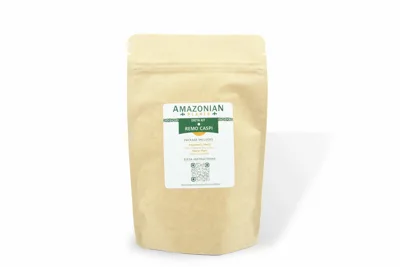
The Tree of Inner Balance
Remo Caspi (Aspidosperma excelsum)
Remo Caspi is a large Amazonian tree worked with for inner balance, steadiness, and quiet strength. Among friends it has earned a playful nickname: "the tree that helps you not give a damn." This guide covers the tree, its tradition, and how to prepare the bark at home.
About the tree
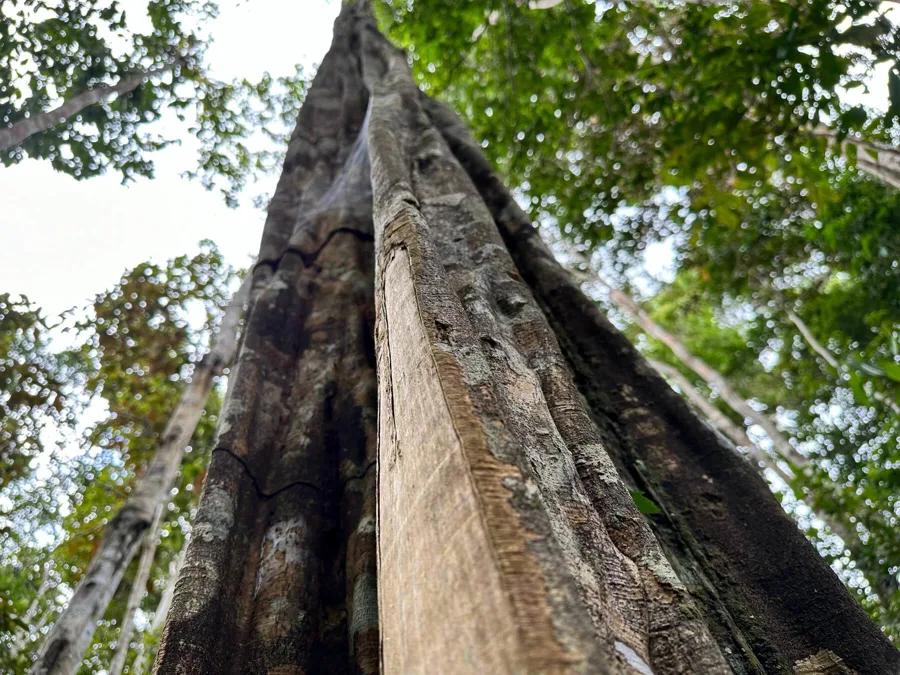
Remo Caspi (Aspidosperma excelsum) is a tall rainforest tree with a distinctive flattened, fluted trunk.[1] Its name means "paddle tree" - remo is Spanish for paddle, caspi is Quechua for tree - because Amazonian people have long carved canoe paddles from its hard, flat wood. The part used in herbal practice is the bark.
Remo Caspi benefits and traditional uses
In Amazonian tradition, Remo Caspi bark is used for both body and character. It is a workhorse remedy around Iquitos and in the Chazuta valley, and a favorite of the paleros - healers who work with tree barks. Here is why people drink it.
For the body
- Fevers and malaria - the bark from the tree's buttress roots is a very common folk remedy for malaria in the Peruvian Amazon,[2] and laboratory studies of the bark's alkaloids were prompted by exactly this traditional use.[5]
- Joints and strength - in the San Martín survey the bark decoction is recorded for rheumatism[3] and, in the strict diets, as a health tonic.[4]
- Everyday remedies - local herbal practice also uses it for coughs and bronchitis, digestion and gas, high blood pressure, wounds, and toothache (among the Ese'eja and Shipibo-Conibo),[2] and healers around Iquitos count it among their plants for infections.[7]
- Resilience - in our own tradition the bark is taken to build physical strength and support the body through demanding periods.
For the spirit and energy
- A palero's tree - Remo Caspi is one of the classic barks of the paleros of Iquitos, who also add it to ayahuasca; such bark mixtures traditionally require a "major diet."[6]
- A Dieta plant - it is also an ingredient of the bark mixtures drunk during strict diets, practices that are said to cleanse, strengthen, and alter the mind.[4]
- Steadiness - on an inner level, people work with Remo Caspi to develop confidence, courage, and emotional steadiness. In our experience it helps reduce reactivity - staying centered instead of being pulled around by every distraction or opinion. Hence the nickname.
Healers see Remo Caspi as a firm, quiet teacher, much like its wood: strong, straight, and unbothered by the current - the same qualities that make it a good paddle. You do not need to hold any particular beliefs to drink the tea, but people who do a Dieta with Remo Caspi often describe staying true to their own values and priorities with less effort.
How to prepare Remo Caspi
Our cup preparation uses a short boil and a longer covered steep.
The tea recipe below uses our powdered bark. For a three-day Dieta, follow the Dieta batch recipe, which makes about six cups and has its own quantities and brewing times.
Tea
- Put 1 teaspoon of Remo Caspi bark powder into a small pot with 1-2 cups of water.
- Gently boil for 5 minutes.
- Turn off the heat, cover, and let it steep for at least 15 more minutes.
- Strain and drink, hot or cold.
Tincture
Take 1 teaspoon of the Remo Caspi tincture - a convenient option if you don't want to brew.
Master Plant Dieta
A Dieta gives you time to build a deeper connection with the plant. In our three-day practice, you drink Remo Caspi tea morning and evening while keeping a simple diet and quiet routine. The Remo Caspi Dieta Kit includes everything you need, and our step-by-step Master Plant Dieta guide covers preparation, brewing, and the daily protocol.
How to brew Remo Caspi tea
Watch our short video on brewing the tea:
Frequently asked questions
What is Remo Caspi?
Remo Caspi is Aspidosperma excelsum, a tall Amazonian tree with a distinctive flattened, fluted trunk. The name means "paddle tree" - its hard, flat wood has long been carved into canoe paddles.
What do people work with Remo Caspi for?
Steadiness, confidence, and emotional balance - staying centered instead of being pulled around by every distraction or opinion. Hence the nickname: the tree that helps you not give a damn.
How do you prepare Remo Caspi tea?
Gently boil 1 teaspoon of bark powder in 1-2 cups of water for 5 minutes, then let it steep for at least 15 more minutes and strain.
FDA disclosure: These statements have not been evaluated by the Food and Drug Administration. Our products are not intended to diagnose, treat, cure, or prevent any disease. The information on this page is provided for educational and cultural purposes only and is not medical advice. Talk to your healthcare provider before working with any plant. See our Terms & Conditions for the full disclosure.
References and further reading
- Aspidosperma excelsum. Plants of the World Online, Royal Botanic Gardens, Kew.
- Taylor, L. Remo Caspi (Aspidosperma excelsum). Tropical Plant Database, Raintree.
- Sanz-Biset, J., Campos-de-la-Cruz, J., Epiquién-Rivera, M. A. & Cañigueral, S. (2009). A First Survey on the Medicinal Plants of the Chazuta Valley (Peruvian Amazon). Journal of Ethnopharmacology, 122(2), 333-362.
- Sanz-Biset, J. & Cañigueral, S. (2011). Plant Use in the Medicinal Practices Known as "Strict Diets" in Chazuta Valley (Peruvian Amazon). Journal of Ethnopharmacology, 137(1), 271-288.
- do Nascimento, M. S. et al. (2019). In Vitro Antiplasmodial Activity and Identification, Using Tandem LC-MS, of Alkaloids from Aspidosperma excelsum, a Plant Used to Treat Malaria in Amazonia. Journal of Ethnopharmacology, 228, 99-109.
- Mazzatenta, C. (2007). Brebaje palo: A Case Study Among the Indigenous Healers of Iquitos (Peru). Revista de Biologia Neotropical, 4(2), 125-137.
- Roumy, V. et al. (2020). Plant Therapy in the Peruvian Amazon (Loreto) in Case of Infectious Diseases and Its Antimicrobial Evaluation. Journal of Ethnopharmacology, 249, 112411.
- O'Shaughnessy, D. & Berlowitz, I. (2021). Amazonian Medicine and the Psychedelic Revival: Considering the "Dieta". Frontiers in Pharmacology.
Remo Caspi in our shop
Everything below is prepared from the same plant this article describes.