The Forest Guardian
Chullachaqui Caspi (Tovomita sp.)
Chullachaqui Caspi is an Amazonian tree with one of the most colorful names in the jungle - it is named after the Chullachaqui, the guardian spirit of the forest. People work with its bark for focus, protection, and vivid dreams. This guide covers the tree, its story, and how to prepare the bark at home.
About the tree
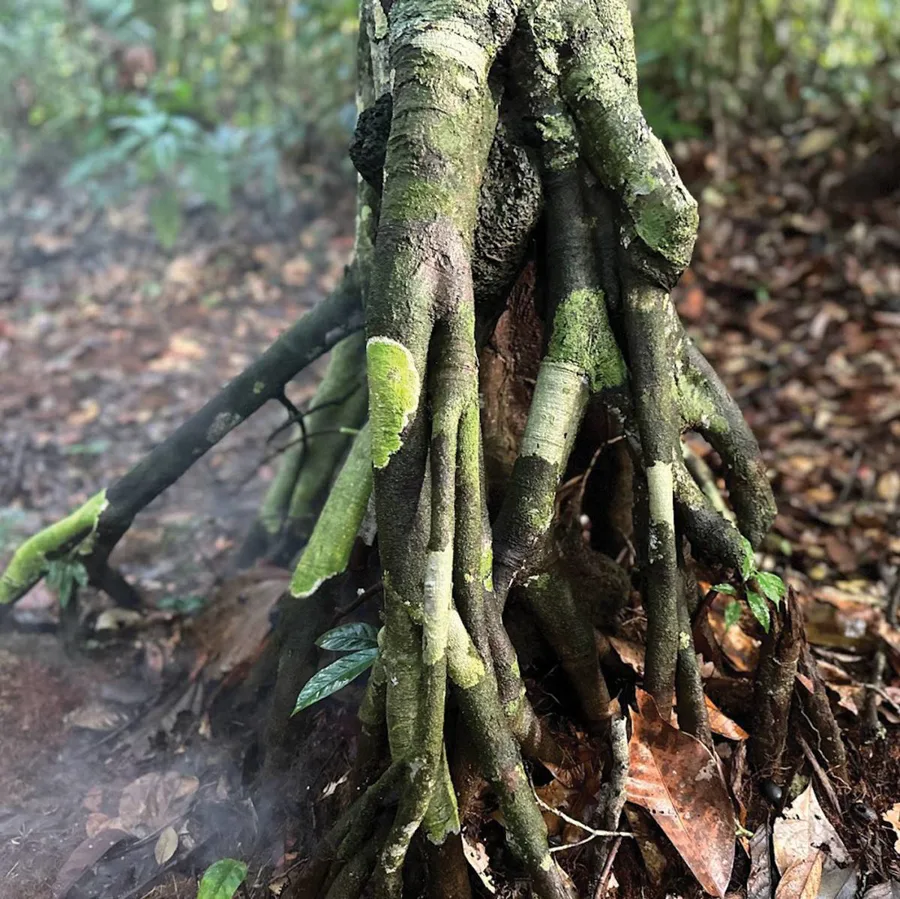
Chullachaqui Caspi (Tovomita sp.) grows in the swampy, seasonally flooded parts of the Amazon rainforest, standing on stilt-like roots that keep it above the wet ground.[1] The bark is the part used in herbal practice.
The name comes from Quechua: chulla chaki means "uneven foot." In Amazonian folklore, the Chullachaqui is a small forest guardian with mismatched feet who protects the jungle and is said to live near these trees.[2][6] Caspi simply means "tree."
Tovomita is the genus, a group of related trees in the Clusiaceae family.[1] The abbreviation "sp." means that a particular species has not been specified. That is the level of identification used in this guide.
Chullachaqui Caspi benefits and traditional uses
Chullachaqui Caspi is an obscure plant outside the Peruvian Amazon, but in the Chazuta valley of San Martín it is the single most important Dieta remedy, and a team of ethnobotanists spent years documenting how it is used there.[4] Here is why people drink it.
For the body
- "The panacea of Chazuta" - Tovomita bark is the base of the bachuja bark mixtures, the remedy most often taken in the local strict diets and considered by healers there to be a cure-all.[2] The uses recorded for these mixtures include a general health tonic, rheumatism, broken bones, abscesses, hernias, and leishmaniasis.[2][3]
- Fitness for the forest - the cleansing diets built around this bark were traditionally endured to get fit for hunting and fishing expeditions, and to make a person's presence unnoticeable to wild animals.[3]
- Endurance and stability - in our own tradition the bark is used to support physical and mental strength through demanding periods.
For the spirit and energy
- The spirit inside the tree - Healers there say the Chullachaqui, "the most popular spirit of the forest" and its protector, lives inside these trees: the single stilt root is said to resemble the spirit's lame foot, so the spirit is found in the plant and in every remedy made from it.[2]
- Joining water and forest - in the bark mixtures, Chullachaqui Caspi stands for the forest while riverside plants like Bobinsana stand for the water world, and the remedy is understood to unite the two.[2]
- Guardianship and protection - Indigenous Amazonian healers describe the forest guardian (Yashingo or Chullachaqui) as the owner who protects everything in the forest, the animals and the plants,[5] which is why people diet this tree for protection and a feeling of being looked after.
- Focus, direction, and dreams - in our experience it is chosen by people looking for direction, better concentration, or help with decisions, and strong, memorable dreams and inner imagery are commonly reported.
In the Master Plant tradition, Chullachaqui Caspi is associated with protection, guidance, and wisdom - qualities borrowed from the forest guardian it is named after. You do not need to hold any particular beliefs to drink the tea, but people who do a Dieta with this tree often describe a clearer sense of direction and a feeling of being looked after.
How to prepare Chullachaqui Caspi
Our simple preparation uses powdered bark, a brief boil, and a covered steep.
The tea recipe below uses our powdered bark. For a three-day Dieta, follow the Dieta batch recipe, which makes about six cups and has its own quantities and brewing times.
Tea
- Put 1 teaspoon of Chullachaqui Caspi bark powder into a small pot with 1-2 cups of water.
- Gently boil for 5 minutes.
- Turn off the heat, cover, and let it steep for at least 5 more minutes.
- Strain and drink, hot or cold.
Tincture
Take 1 teaspoon of the Chullachaqui Caspi tincture - a convenient option if you don't want to brew.
Master Plant Dieta
A Dieta gives you time to build a deeper connection with the plant. In our three-day practice, you drink Chullachaqui Caspi tea morning and evening while keeping a simple diet and quiet routine. The Chullachaqui Caspi Dieta Kit includes everything you need, and our step-by-step Master Plant Dieta guide covers preparation, brewing, and the daily protocol.
Frequently asked questions
What is Chullachaqui Caspi?
An Amazonian tree of the Tovomita genus that grows in swampy, flooded forest, standing on stilt-like roots. It is named after the Chullachaqui, the guardian spirit of the forest.
Who is the Chullachaqui?
In Amazonian folklore, a small forest guardian with mismatched feet who protects the jungle and is said to live near these trees. The Quechua name means "uneven foot".
How do you prepare Chullachaqui Caspi tea?
Gently boil 1 teaspoon of bark powder in 1-2 cups of water for 5 minutes, let it steep for at least 5 more minutes, then strain.
What do people work with it for?
Focus, direction, protection, and vivid dreams - it is a classic Dieta tree for people looking for clarity and a sense of being looked after.
FDA disclosure: These statements have not been evaluated by the Food and Drug Administration. Our products are not intended to diagnose, treat, cure, or prevent any disease. The information on this page is provided for educational and cultural purposes only and is not medical advice. Talk to your healthcare provider before working with any plant. See our Terms & Conditions for the full disclosure.
References and further reading
- Tovomita Aubl.. Plants of the World Online, Royal Botanic Gardens, Kew.
- Sanz-Biset, J. & Cañigueral, S. (2011). Plant Use in the Medicinal Practices Known as "Strict Diets" in Chazuta Valley (Peruvian Amazon). Journal of Ethnopharmacology, 137(1), 271-288.
- Sanz-Biset, J. & Cañigueral, S. (2013). Plants as Medicinal Stressors, the Case of Depurative Practices in Chazuta Valley (Peruvian Amazon). Journal of Ethnopharmacology, 145(1), 67-76.
- Sanz-Biset, J., Campos-de-la-Cruz, J., Epiquién-Rivera, M. A. & Cañigueral, S. (2009). A First Survey on the Medicinal Plants of the Chazuta Valley (Peruvian Amazon). Journal of Ethnopharmacology, 122(2), 333-362.
- Berlowitz, I. et al. (2025). Towards Culturally Inclusive Healthcare in Peru: Mapping Epistemic Concepts in Contemporary Indigenous Amazonian Medicine. PLOS Global Public Health.
- Rocchietti, A. M. (2024). Chullachaqui de la selva. ANTI Nueva Era, Documentos de Trabajo, 12, 9-27.
Chullachaqui Caspi in our shop
Everything below is prepared from the same plant this article describes.